
→日本語
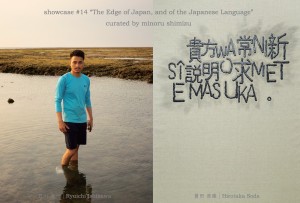
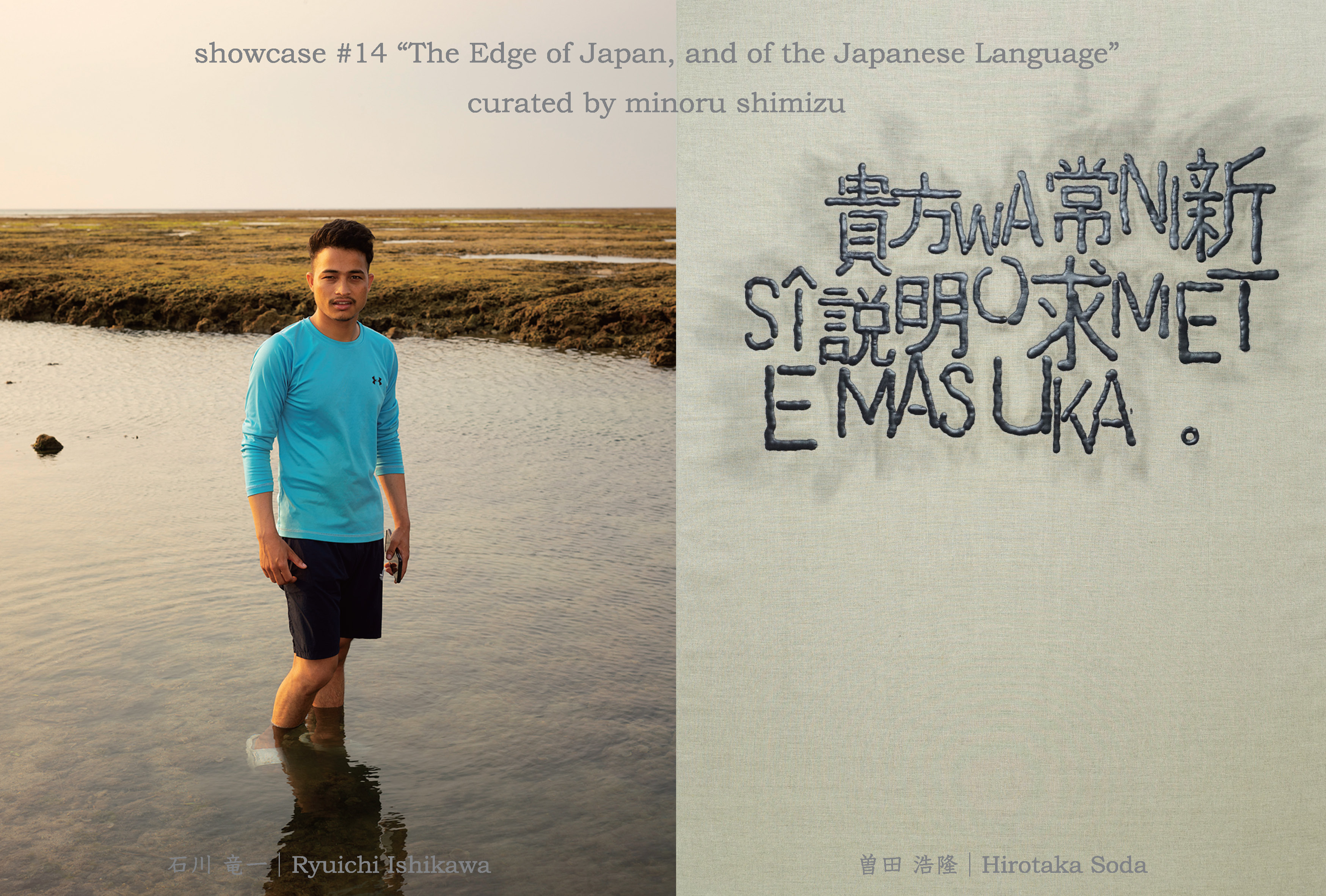
showcase #14
“The Edge of Japan, and of the Japanese Language”
curated by minoru shimizu
Ryuichi Ishikawa | Hirotaka Soda
2026.04.17(fri.)— 05.17(sun.)
open on fri., sat., & sun. 12:00-18:00
appointments are available on weekdays
.
Press Release
→Click here to see previous “showcase” curated by minoru shimizu.
.
showcase #14, 2026
The Edge of Japan, and of the Japanese Language
Ryuichi Ishikawa (1984–) likely needs no introduction. After gaining attention as an honorable mention in the 2012 Canon New Cosmos of Photography (selected by Minoru Shimizu), he won the prestigious Kimura Ihéi Award in 2014. Since then, he has been based in Okinawa and continues to be active. His signature work is the “Okinawan Portraits” series, which vividly captures diverse Okinawans—of different genders, races, and occupations—alongside their daily lives. This is the artist’s second appearance since the 2014 showcase, “Portraits of Japan.” Ten years later, he is once again confronting the theme of portraiture. Whereas the earlier Okinawan portraits vividly captured the people alongside their living environments, the new works seek to reveal the entirety of the individuals’ lives—and, by extension, the present state of Okinawa—by delving deeper into each person.
“Calligraphy as contemporary art,” which has begun to attract attention in recent years, redefines calligraphy as a form of contemporary art that takes language as its subject matter and expresses language. At the cutting edge of this tendency is Soda Hirotaka (b. 1974). Taking language as one’s subject matter and expressing language equate to an awareness that words are in every respect readymades and that their essence is rooted in the fundamental political nature of human society. Words were not created by anyone in particular, but because they are not generated spontaneously, they are artificial things or “readymades” provided to newborn babies as things that are “already made.” Moreover, as a system of differentiated sounds, words are continually changing and from the outset there are no clear boundaries between one language and another. It was none other than the politics of “nationalism” that rose in the 18th century that caused them to separate into individual “languages.” As for systems of writing, these were invented by societies as they came to deal with large populations that exceeded the human faculty of memory and the accompanying large volumes of data and are clearly artificial things, which, as they reached the stage where they became linked to print media, changed from written records of individuals into norms in the form of orthographies. “National languages,” “native languages,” “writing” and “orthographies” are all products of politics. The very edge that politics has given to the Japanese language is the theme of Hirotaka Soda. Poetic phrases—whether original or quoted—are written on the canvas using asphalt repair material, yet this “Japanese” is spelled out in kanji and alphabet. Unorthodox spellings reflect the groundlessness of so-called standard orthography.
The 2026 showcase#14 is a two-person exhibition pairing Ryuichi Ishikawa, who attempts new portraits at Japan’s edge, Okinawa, with Hirotaka Soda, who continues to question the edge of the Japanese language. This time, I have planned an exhibition blending the works of two artists. Come experience the resonance between these two distinct edges at the exhibition.
April, 2026
Minoru Shimizu
.
Ryuichi Ishikawa
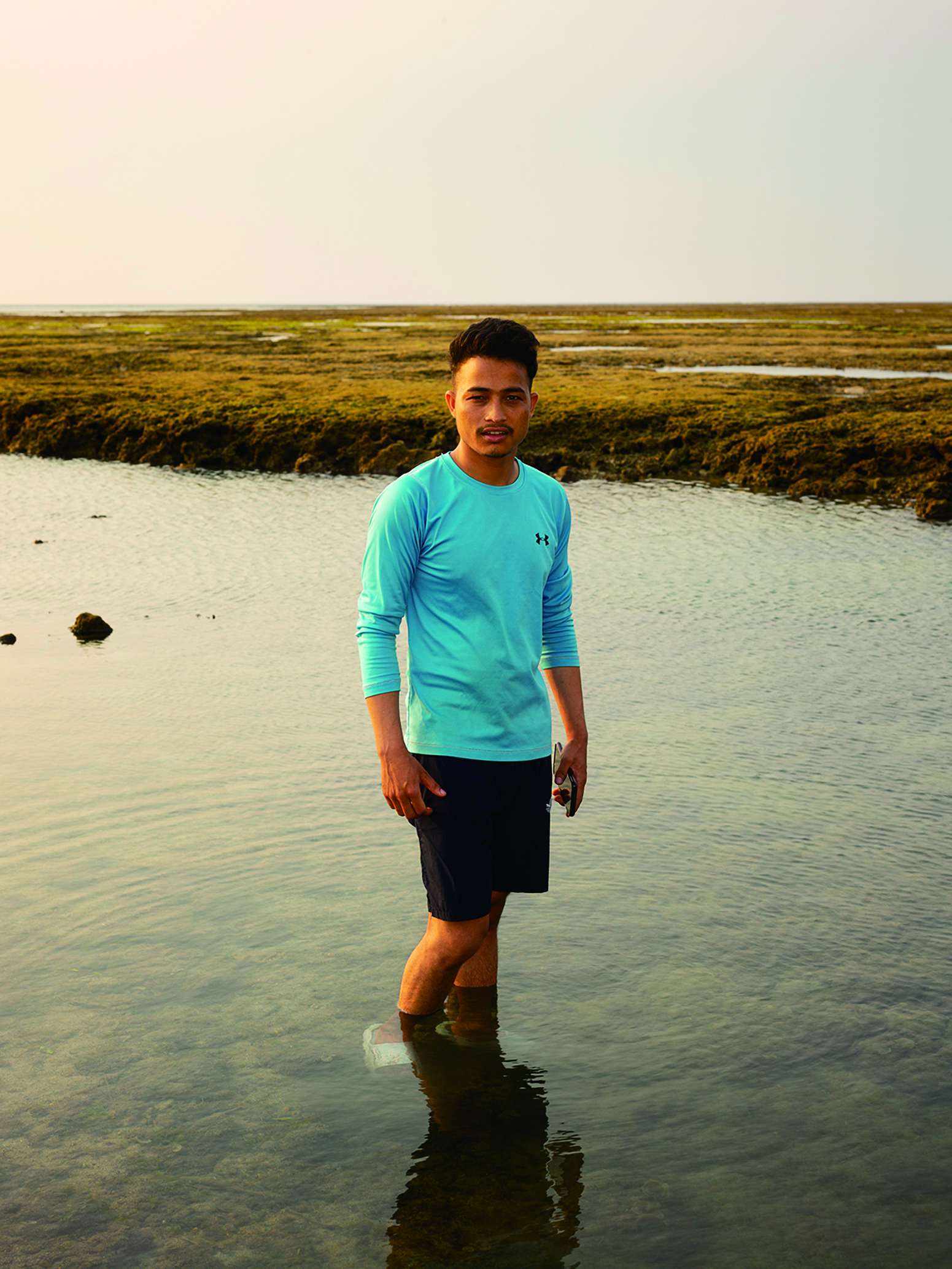
From around 2010, when I began to consciously focus on portrait photography, and for roughly the following decade, I was thinking about how individuals exist within various environments, situations, and relationships, based on the idea that the surroundings and circumstances that envelop a person are deeply connected to their personality. My original interest lay in existence itself, and “okinawan portraits” emerged from the fact that the land of Okinawa is deeply intertwined both with the environments depicted in the photographs and with my own identity as the photographer.
Through subsequent experimentation and exploration via photography, and in the process of producing the work Inside Life (The Inside of Life), the direction of these relationships gradually shifted. Rather than focusing on the visible individual subject itself or the information readable from its details, my attention turned toward the background that can be interpreted through the subject’s mode of being, its parts, and its relationships with various things beyond the subject.
In this exhibition, works have been selected from my ongoing series”qualia”and “The Shell of Human” in response to a request from Minoru Shimizu, following the keyword “Okinawa.” As with my previous works, the selection consists of photographs taken in Okinawa, and where possible, I have tried to choose subjects who have some form of connection to Okinawa. However, given that the underlying concept arises from interests at a nearly unconscious level, and as exemplified particularly in “qualia”, where the background is intentionally simplified, the works are largely detached from regional culture—aside from my own origins and the location of the shoot. Instead, they are intended to foreground the subject’s existence itself and to encourage interpretations of environments, situations, land, and history as abstracted within the individual’s inner life.
In “The Shell of Human”, by likening portraits photographed at or near the sea to seashells, I attempt to bring into relief the human outline as a moving body of physical energy. In “qualia”, the background is further simplified, and by directing attention to the subject’s details, the sensations evoked through visually conveyed textures emerge as ineffable qualia—difficult to describe in words. At the same time, by fostering empathy toward the subject’s inner life as suggested by subtle expressions in these details, the work seeks to connect at the deepest level of existence.
.
Hirotaka Soda
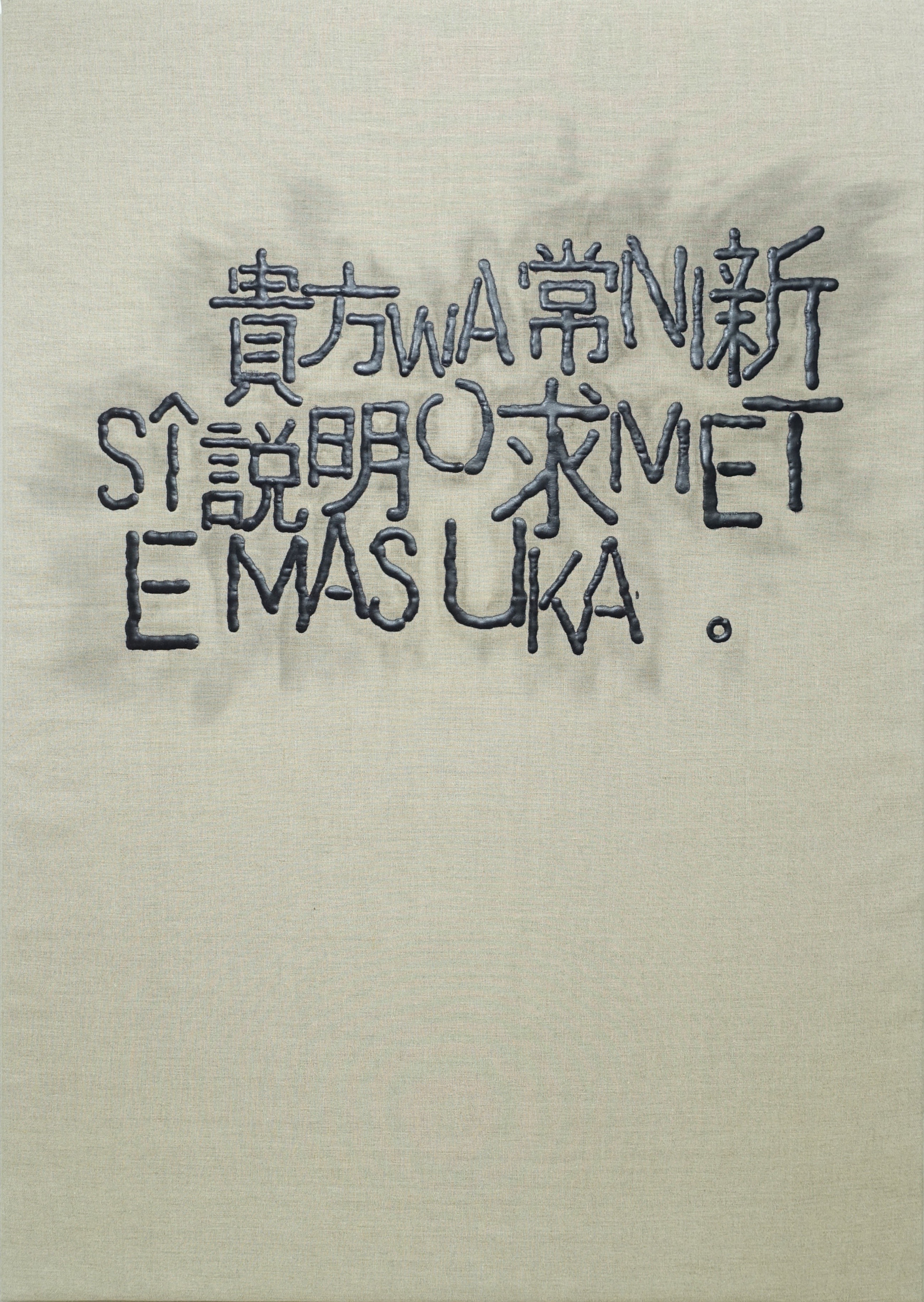
When reading words handwritten by someone else, there is a rough feeling, as if the writer’s gaze is caressing the writer’s skin, and the handwriting is materialized by the writing material. The meaning of the written words does not materialize, but depending on the content, there is a unique feeling that is different from the feel of handwritten characters. For me, the world of writing, with its duality of writing and reading, is a mixture of these sensations, with unique hues absorbed into my consciousness through my gaze. The sensation I get when I write or when I read someone else’s writing is always fluctuating between discomfort and pleasure. I cherish the confirmation of this sensation.
・
.
.
-WORKS-
-INSTALLATION VIEW-